“I personally didn’t know about this. This is the first time anyone has shown us how the system works, and how we can be part of it.”
For many years, women in host communities across Akwa Ibom and Rivers States have remained on the margins of decisions that shaped their lives. Host Community Development Trusts (HCDTs), established under the Petroleum Industry Act (PIA) to empower communities, often operated without meaningful women’s participation. Engagements were dominated by a few voices, while women who bore the brunt of poor social services, environmental degradation, and limited opportunities were rarely invited to the table.
This gap was not due to lack of interest, it was the result of limited awareness, structural exclusion, and low capacity for engagement. Many women had never been told they had a right to participate in HCDT governance.
Policy Alert stepped in through the AGILE (Advancing Gender, Innovation and Local Engagement) project to change that.
Policy Alert’s Intervention: A Turning Point in Akwa Ibom and Rivers States
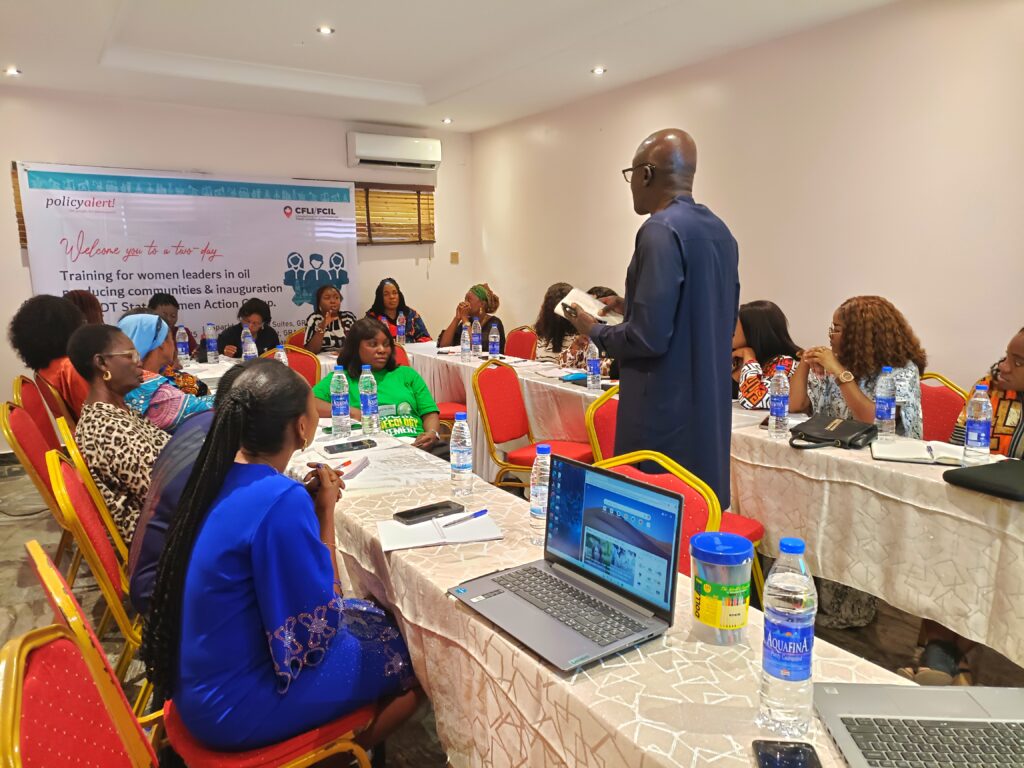
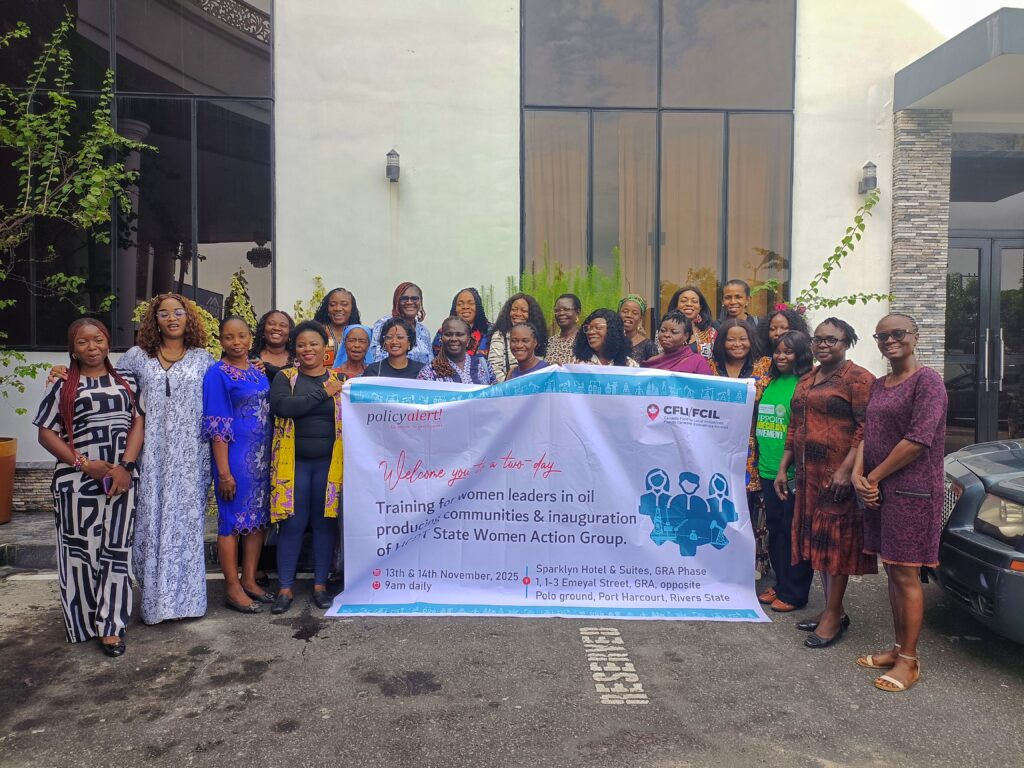
As part of the AGILE Project, Policy Alert facilitated two intensive training sessions, first in Uyo, Akwa Ibom, and then in Port Harcourt, Rivers State, designed to equip women with practical knowledge and tools to participate effectively in HCDT governance.
The training brought together 50 women leaders from host communities, including community mobilisers, youth advocates, market women, teachers, and emerging grassroots influencers. Many walked into the training halls unsure of their place in governance structures. But as the sessions unfolded, something remarkable began to happen.
The training rooms buzzed with stories of challenges, expectations, and the desire to be heard. Facilitators introduced the women to the structure of HCDTs, their legal rights under the PIA, practical advocacy tools, negotiation strategies, and the importance of inclusive governance and by the closing sessions, they walked out more informed, confident, and ready to take action.
Participants were trained on:
- Understanding the PIA and HCDT governance structures.
- Women’s rights and participation opportunities in HCDTs.
- Practical advocacy and negotiation skills
- Community organising and collective action.
- Tools for demanding transparency and accountability.
What emerged went beyond knowledge transfer to a shift in mindset. Women who once felt like “spectators” in community meetings began to see themselves as rightful contributors to development decisions.
One participant from Rivers State summed it up powerfully: “I personally didn’t know about this. This is the first time anyone has shown us how the system works, and how we can be part of it.”
Formation of Two Women’s HCDT State Working Groups
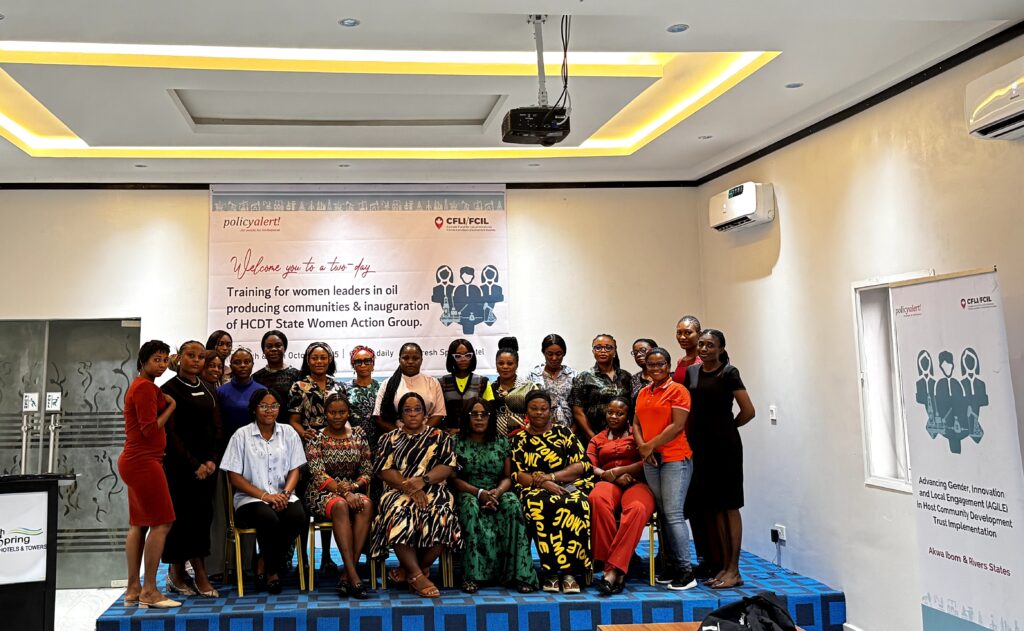
A major outcome of the training was the establishment of two Women’s HCDT State Working Groups, one each in Akwa Ibom and Rivers States. These groups were self-organised by the participants with technical guidance from Policy Alert.
Each working group is now positioned to:
- Lead state-level advocacy on women’s inclusion in HCDTs
- Monitor HCDT formation and compliance with gender provisions
- Support community sensitisation on the PIA
- Create peer-learning spaces for women activists
- Engage regulators, companies, and HCDT trustees
The formation of these working groups signifies the beginning of a sustained, coordinated movement for gender-responsive resource governance in both states.
The groups will swing into action in the coming weeks, mapping key stakeholders, identifying gaps in existing HCDT structures, and planning coordinated engagements in their communities. For the first time, women across communities will be speaking with one voice for inclusive governance.This working groups, strengthened by shared purpose, have become vehicles for long-term change, ensuring that HCDTs serve the people they were meant to serve.
For Policy Alert, strengthening women’s participation is central to achieving inclusive, accountable, and community-driven governance of extractive resources. The success of these training reaffirms one key message: When women are empowered with knowledge and platforms, communities benefit.
The 50 women trained are more than just beneficiaries, the state working groups formed will continue to influence resource governance discussions and advocate for a more transparent, equitable implementation of the PIA.
Policy Alert remains committed to supporting these women, building their capacity, and amplifying their voices as they lead the charge toward inclusive HCDT governance in the Niger Delta.
